Creating emotionally safe experiences is one of the most important aspects of effective equine-assisted and nature-based facilitation.
At ARCH, we believe people experience the greatest opportunities for healing, learning, and transformation when they feel genuinely seen, heard, and safe enough to explore their own stories.
That belief has shaped ARCH from the very beginning.
When we founded ARCH, our starting point wasn’t a model, a technique, or a set of activities.
It was a question:
What helps people feel safe enough to truly change?
Again and again, our experience led us to the same answer: emotional safety.
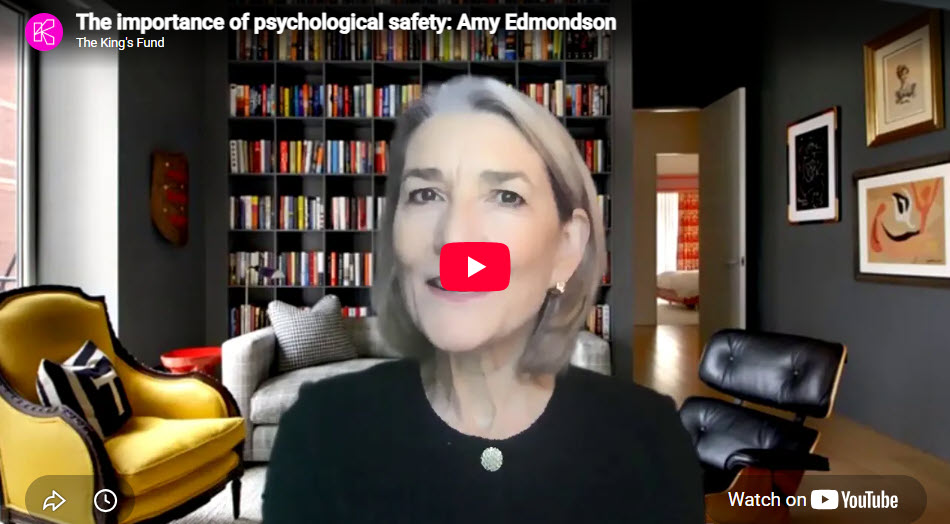
Looking back, it’s no surprise that the very first book we chose for our ARCH quarterly book club in 2022 was The Fearless Organization: Creating Psychological Safety in the Workplace for Learning, Innovation, and Growth by Amy Edmondson. Although written for organizations and teams, one idea deeply resonated with us: people learn, contribute, and grow when they feel safe enough to take interpersonal risks. They ask questions. They admit uncertainty. They wonder out loud. They explore without worrying about having the “right” answer.
We realized those same conditions are essential in facilitation.
Transformation rarely happens when clients are trying to give the “right” answer. It happens when they feel safe enough to be curious, to not know, and to discover.
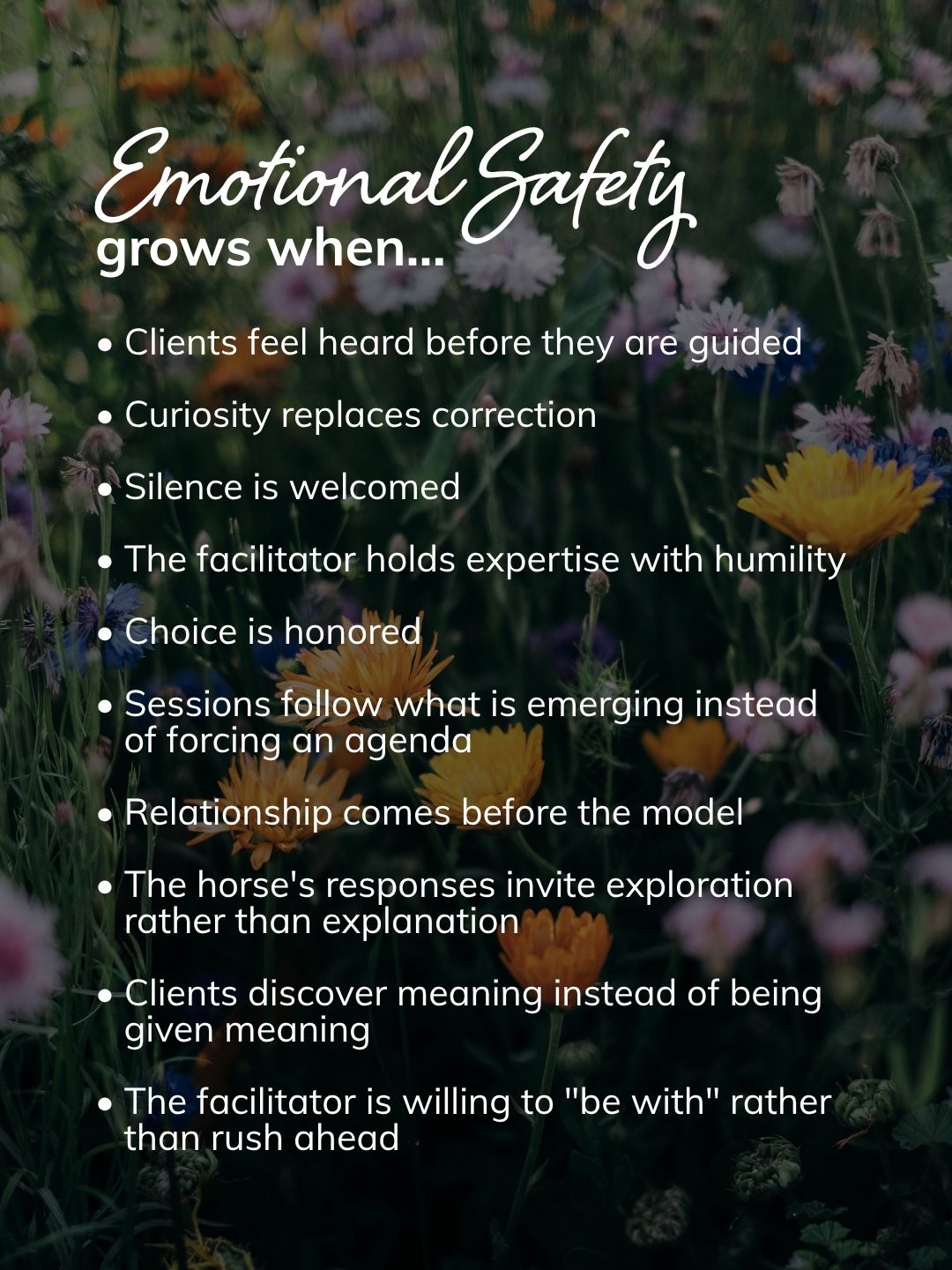
Not the kind of safety that comes simply from being comfortable or protected from challenge. Real emotional safety is something much deeper. It is the experience of feeling seen without judgment, heard without needing to defend yourself, and accepted without having to become someone different first.
It is within that kind of space that healing, growth, and transformation become possible.
Emotional Safety Is Not Passive
As facilitators, many of us strive to create “safe spaces.” Yet emotional safety is not something we can simply announce or assume exists because our intentions are good.
It is created, or diminished, in hundreds of small moments.
A rushed question.
An interruption.
The urge to explain.
The desire to fix.
The pressure to reach an insight.
Conversely, emotional safety grows through our willingness to slow down, remain curious, tolerate uncertainty, and trust the unfolding process.
People often remember less about what we said and more about how they felt in our presence.
Did they feel enough freedom to explore?
Did they feel pressured to perform?
Did they sense they needed to find the “right” answer?
Or did they experience the rare gift of simply being allowed to be?
Looking at Ourselves First
One of the shifts ARCH invites is to look inward before looking outward.
When a client seems hesitant, guarded, or unsure, it can be tempting to wonder what is preventing them from engaging.
ARCH encourages a different question:
What in my facilitation might be making it easier, or harder, for emotional safety to grow?
This isn’t about self-criticism. It’s about awareness.
Every interaction communicates something. It can invite exploration, or it can unintentionally communicate that there is a right answer, a correct interpretation, or a direction we hope the client will go.
Often, these moments arise not because we are doing something wrong, but because we care deeply and want to help.
This is where the nuances of facilitation matter.
One of the foundations of ARCH is recognizing that facilitation is made up of countless subtle choices.
Often it isn’t our activities that create transformation. It is how we engage within them.
The tone of a question.
The timing of an observation.
The amount of silence we allow.
Whether we remain alongside someone’s experience or unintentionally step in front of it.
Whether we become more focused on understanding what is emerging than on where we think the session should go.
These nuances can either invite deeper exploration or quietly close the door.
Many facilitators spend years learning what to do.
ARCH invites us to become equally curious about how we are doing it.
Relationship Before the Model
Frameworks, theories, and activities all have value. They give us language, structure, and confidence.
Yet emotional safety is rarely created by following a model well. It grows through the quality of our presence within the relationship.
When we become more focused on implementing an approach than understanding the person in front of us, clients often sense it. They may begin trying to fit the model rather than discovering their own experience.
When we slow down enough to truly see, hear, and respond to what is emerging in the moment, something different becomes possible. Rather than guiding clients toward where we think they should go, we begin building from where they are.
At ARCH, we see frameworks as guides that support the relationship rather than direct it, helping facilitators remain curious, responsive, and attentive while trusting the story unfolding through the relationship.
Clients rarely experience life in neat, predictable steps. Neither do horses.
Rather than asking,
“What should happen next?”
we begin asking,
“What is emerging here?”
This doesn’t mean abandoning intention. It means allowing our knowledge and frameworks to remain in service of the relationship, rather than expecting the relationship to serve them.
The session is not something we deliver. It is something we build together.
Being Truly Seen
Human beings long to be seen, heard, and understood. Yet being understood is different from being analyzed, being seen is different from being evaluated, and being heard is different from having someone search for a solution.
When people experience genuine presence, they often discover their own wisdom. New perspectives emerge not because someone handed them an answer, but because they finally had the space to notice what was already there.
Every time we invite clients to notice rather than tell them what to notice, every time we replace certainty with curiosity, and every time we leave room for choice rather than rushing toward interpretation, we strengthen emotional safety.
This is why emotional safety matters so profoundly.
It allows people to become authors of their own stories rather than recipients of someone else’s interpretation.
Horses Notice What We Sometimes Miss
Those who facilitate alongside horses witness something remarkable.
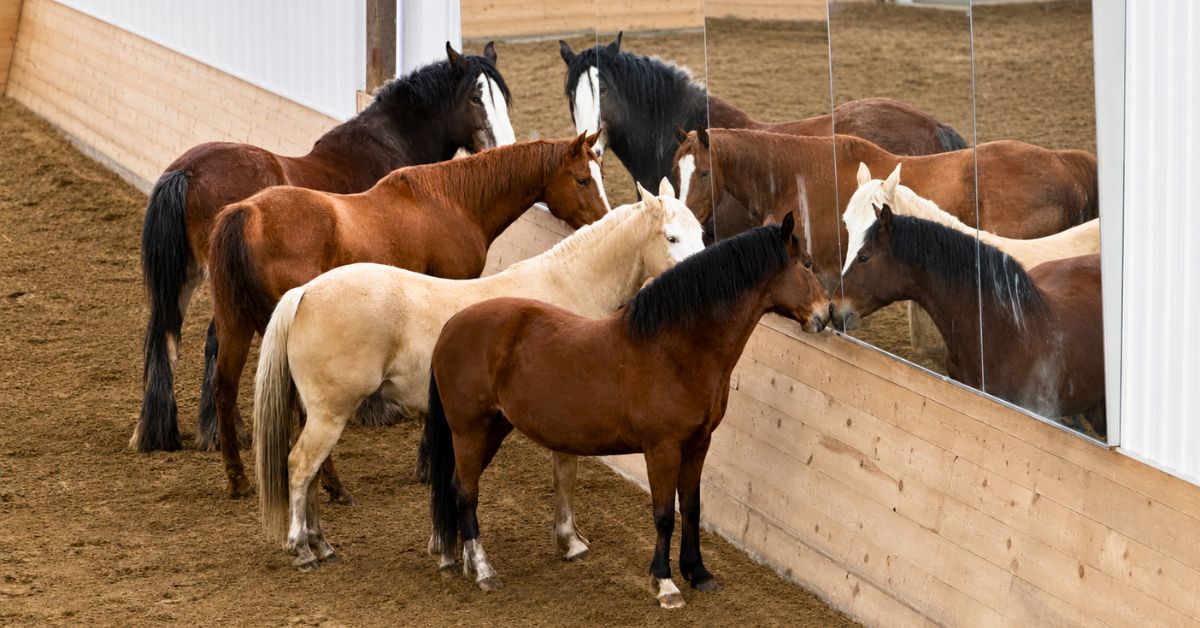
Horses are exquisitely attuned to presence, authenticity, and relationship. They often respond to subtle shifts that invite us to become more curious about what is happening beneath the surface.
The horse isn’t there to provide the “right answer.” Instead, the horse becomes part of a living relationship that both reflects and influences the experience.
As facilitators, our role is not to control that relationship, but to create space where both the client and the horse can genuinely engage. The less attached we become to directing the experience, the more opportunity there is for authentic moments to emerge.
Emotional Safety is Ongoing Practice
Creating emotionally safe spaces is not a destination we reach once and for all.
It is an ongoing practice of paying attention.
It begins with us:
- Our ability to remain present when emotions arise.
- Our comfort with not knowing.
- Our awareness of our own assumptions.
- Our willingness to notice when our desire to help quietly becomes a desire to lead.
Expertise matters.
Training matters.
Experience matters.
Yet emotional safety grows when expertise is held with humility. While we bring knowledge of the facilitation process, each client remains the expert on their own story.
This practice is reflected in the countless small choices we make every day:
- Noticing the subtle moments that either expand or contract possibility.
- Choosing curiosity over certainty.
- Trusting that people often grow most deeply when they feel genuinely accompanied rather than expertly led.
At ARCH, this commitment to emotional safety remains at the heart of everything we do.
Because when people feel truly seen and heard, something remarkable happens.
They become willing to wonder.
To explore.
To discover.
And when that happens, stories begin to shift.
And when stories shift, lives can change.
Reflection
As you think about your own facilitation, consider:
- When do clients seem most willing to take emotional risks?
- What subtle habits might unintentionally interrupt emotional safety?
- When do you notice yourself becoming more attached to an agenda than to what is emerging?
- How might slowing down create more room for clients to discover their own meaning?
- What would change if your greatest goal wasn’t to lead transformation, but to create the conditions where transformation could naturally emerge?
Continue the Conversation
Emotional safety doesn’t happen by chance. It is cultivated through presence, curiosity, relationship, and the countless subtle choices facilitators make every day.
At ARCH, we are passionate about exploring these nuances together. Through our community, trainings, and shared learning, we continually deepen our understanding of what helps people, and the horses and natural environment we work alongside, feel safe enough to explore, discover, and grow.
If these ideas resonate with you, we invite you to learn more about the values and philosophy that guide ARCH and discover a community committed to continually evolving the art of facilitation.
🔹 Click here to learn more about the ARCH foundation and community



Responses
What a lovely blog! Thank you so much! someday, I will check out the book…..:) I would have put the website but can’t find the URL
Thank you, Suzanne!
Hmmm – you seem to becoming very perceptive in your old age, Lynn. In fact, I’d say your wisdom definitely transcends the innate potential afforded by genetic inheritance alone. Your parents couldn’t be prouder of such accomplishment!
Thanks, Dad! 🙂
Thank you Lynn, for such a comprehensive insight into Emotional Safety! So much food for thought & I think one of the main reasons Arch is so successful, comparatively quickly for many clients. Clients don’t seem to go automatically into giving the ‘right’ answers. Take home for me is the reminder to slow down & constantly be paying attention to each nuance that develops. On going practice is key for me! Thanks again!
Thank you, Sandy!
Hi Lynn, what a good synopsis. I like, “the horse becomes part of a living relationship that both reflects and influences the experience.” This is important in noticing and being aware of what is happening.
I will continue to think about this question, keeping it foremost for next session.
“What would change if your greatest goal wasn’t to lead transformation, but to create the conditions where transformation could naturally emerge?”
Great article!
Hi Brenda, thank you! I’ll love to hear insights you have applying these thoughts in your sessions!
Great article Lynn; As always so straightforward and honest
That safety allows us to be storytellers unencumbered with fear and self doubt.
Thank you, Bill! Your words mean a great deal, especially knowing your remarkable work and perspective as a storyteller. I appreciate your response!
I loved everything about this article Lynn!!
Thank you, Rhonda!